
Advantages of Using UHPC Wall Panels in High-Rise Buildings
Ultra-High Performance Concrete (UHPC) wall panels have become a cornerstone of modern high-rise construction, offering a combination of strength, durability, and design versatility that traditional concrete solutions cannot match. With urban environments increasingly dominated by tall structures, the demand for building materials that reduce structural load while maintaining aesthetic flexibility has surged. UHPC wall panels provide an effective solution for architects and engineers, supporting innovative façades, energy efficiency, and long-term building performance.
The construction industry faces multiple pressures, including urban densification, sustainability requirements, and the demand for faster project delivery. High-rise buildings are particularly sensitive to weight, wind loads, seismic activity, and façade durability. Traditional concrete panels, while strong, often require substantial thickness and reinforcement, which increases structural load and complicates installation.
UHPC wall panels address these challenges with high compressive and tensile strength, enabling thinner, lighter panels that maintain performance under extreme conditions. Market trends indicate growing adoption of prefabricated UHPC panels for commercial, residential, and mixed-use skyscrapers, particularly in regions with dense urban development or harsh climatic conditions. Developers and contractors are recognizing the cost savings in reduced structural support, faster installation, and lower long-term maintenance.
UHPC is a cementitious composite material that differs from conventional concrete in terms of composition, density, and performance:
Ultra-Dense Matrix: Fine particles are packed to minimize porosity, enhancing mechanical strength and weather resistance.
Fiber Reinforcement: Steel, glass, or synthetic fibers improve tensile and flexural strength, mitigating cracking and deflection in high-rise façades.
Low Water-Cement Ratio: A precise mix ensures minimal shrinkage and optimal curing, which is crucial for thin, large-format panels.
Chemical Admixtures: Superplasticizers and viscosity modifiers improve workability, flow, and long-term durability.
These factors allow UHPC wall panels to resist environmental stresses, seismic forces, and wind loads typical in tall buildings while offering architects freedom to implement complex geometries.
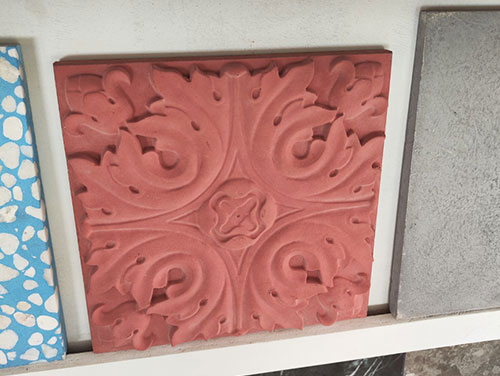
UHPC wall panels typically consist of:
High-quality Portland cement or blended cement
Fine aggregates such as silica sand or quartz
Fibers for tensile reinforcement (steel, glass, or synthetic)
Chemical admixtures for workability and cohesion
Optional pigments or surface treatments for aesthetic finishes
Mixing: High-shear mixers ensure uniform fiber dispersion.
Casting or Pressing: Panels are shaped in precise molds under controlled pressure.
Surface Texturing: Custom molds or post-cast treatments create architectural patterns or smooth finishes.
Curing: Controlled curing environments optimize strength, reduce shrinkage, and improve durability.
Finishing: Sandblasting, polishing, or protective coatings enhance longevity and appearance.
This controlled process ensures consistent quality across panels, which is essential for high-rise applications where structural integrity and façade uniformity are critical.
Several factors determine the performance of UHPC wall panels in high-rise applications:
Fiber Distribution: Uneven distribution can compromise tensile strength and lead to localized cracking.
Panel Thickness and Geometry: Thin panels require precise engineering to resist deflection and wind loads.
Curing Conditions: Temperature and humidity fluctuations during curing can affect strength and durability.
Environmental Exposure: Coastal or urban pollution environments may necessitate specialized admixtures or coatings.
Installation Practices: Incorrect anchoring or alignment can impact both performance and safety.
Proper quality control and adherence to engineering specifications ensure that UHPC panels meet the demanding standards of high-rise construction.
Selecting experienced suppliers is critical for successful implementation:
Proven track record in prefabricated UHPC panel production
In-house testing and quality assurance capabilities
Ability to create custom molds for complex architectural designs
Efficient logistics for large-format panels
Engineering support for installation and integration with structural frameworks
Collaborating with reputable suppliers mitigates risks related to defects, delays, and structural performance issues, especially for high-rise projects where safety and precision are paramount.
Despite their advantages, UHPC wall panels present certain challenges:
High Initial Material Costs: UHPC is more expensive than conventional concrete, though it reduces long-term maintenance and structural costs.
Complex Installation Requirements: Large or intricate panels require specialized handling, anchoring, and alignment.
Surface Quality Control: Air voids or fiber clumping may affect appearance if production standards are not rigorously maintained.
Limited On-Site Adjustments: Prefabricated panels cannot easily be modified on-site without risking structural integrity.
Awareness and proactive management of these issues are essential to maximize the benefits of UHPC wall panels in skyscraper projects.
UHPC wall panels are increasingly used across various high-rise building projects:
Commercial Towers: Office buildings and mixed-use complexes benefit from lightweight panels that allow expansive, uninterrupted façades.
Residential Skyscrapers: Multi-story residential buildings use UHPC panels for reduced structural load, improved thermal performance, and aesthetic customization.
Institutional and Civic Projects: Museums, cultural centers, and university buildings utilize UHPC for intricate textures, complex geometries, and long-term durability.
Infrastructure and Transportation: Bridges, airports, and elevated walkways leverage UHPC panels for impact resistance, longevity, and low maintenance.
Case studies demonstrate the versatility of UHPC panels in both aesthetic and structural applications for tall buildings.
The UHPC industry is evolving rapidly with new technologies and sustainability initiatives:
Prefabrication and Modular Design: Large-format UHPC panels accelerate construction timelines and ensure consistent quality.
Sustainable Mixes: Incorporating recycled aggregates and supplementary cementitious materials reduces environmental impact.
Enhanced Thermal and Acoustic Performance: Integration with insulation layers improves energy efficiency and occupant comfort.
Digital Fabrication: CNC molds, 3D printing, and robotic casting enable highly detailed, complex panel designs.
Research on Fire Resistance and Longevity: Ongoing innovations focus on optimizing UHPC for extreme climatic and fire exposure conditions.
These trends indicate that UHPC wall panels will continue to play a critical role in high-rise construction, balancing performance, sustainability, and design freedom.
1. How does UHPC reduce structural load in high-rise buildings?
UHPC wall panels are thinner and lighter than conventional concrete, which decreases dead load and reduces the need for heavy supporting frameworks.
2. Are UHPC panels resistant to wind and seismic forces?
Yes, fiber reinforcement and ultra-dense concrete structure provide superior flexural and tensile strength, enhancing performance under dynamic loads.
3. Can UHPC panels support intricate façade designs?
Absolutely. UHPC allows complex textures, curves, and large-format panels without compromising structural integrity.
4. What maintenance do UHPC panels require?
Periodic cleaning and inspection, combined with protective coatings in harsh environments, ensures long-term durability.
5. Is UHPC cost-effective for high-rise projects?
While upfront costs are higher, UHPC reduces structural requirements, maintenance expenses, and installation time, offering long-term savings.
High-performance UHPC wall panels are redefining high-rise construction, offering a unique combination of strength, durability, and architectural flexibility. Their lightweight, prefabricated design reduces structural load, accelerates construction schedules, and allows for innovative façade solutions. With enhanced weather, fire, and seismic resistance, UHPC panels ensure long-term building performance and aesthetic appeal. As sustainability and digital fabrication technologies advance, UHPC wall panels are poised to become a standard choice for architects and engineers seeking durable, efficient, and visually striking solutions in modern skyscraper design.
Diese Website verwendet Cookies, um sicherzustellen, dass Sie das beste Erlebnis auf unserer Website erhalten.

 English
 Español
 Portugues
 Pусский
 Français
 日本語
日本語 한국어
한국어 العربية
 Italiano
 Polski
 Türk dili
 Melayu
 中文
中文 қазақ
қазақ עִברִית
 українська
 norsk
norsk o'zbek
 ଓଡିଆ
ଓଡିଆ



 Telefon
Kommentar
(0)